
Improving Student Outcomes
Identifying Strengths & Aligning Futures
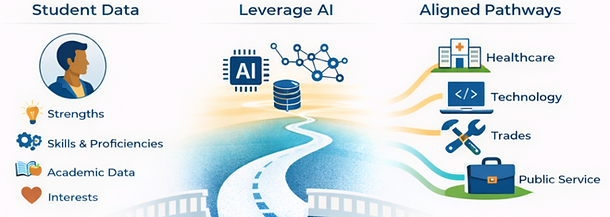
Improve student outcomes by capturing skills, proficiencies, and interests and aligning students to pathways where they’re most likely to excel.

A high school diploma measures completion, not readiness to excel in today’s world
With today’s technology, artificial intelligence, and data, why aren’t we guiding students toward pathways where they’re most likely to excel based on their strengths, skills, interests, and proficiencies?
What Improving Student Outcomes Really Means
Improving outcomes means aligning student strengths, skills, and interests to frameworks that indicate where they’re most likely to excel pre and postsecondary.

Why this matters now

Job descriptions and requirements are evolving faster than education systems can adapt, affecting student outcomes beyond high school.
Data-driven guidance is becoming the baseline, shaping how organizations make decisions and measure performance.
K–12 education is extending beyond traditional academic metrics to demonstrate readiness and alignment to today’s workforce.
When Readiness Becomes Clear, Outcomes Improve
When student data is overlaid and aligned intentionally, readiness becomes clear, guidance becomes precise, and outcomes improve.

Student EI gives districts a clear way to turn readiness into actionable guidance.